
ByJohn A
Why Winter Is the Best Time to Own a Traditional Sauna
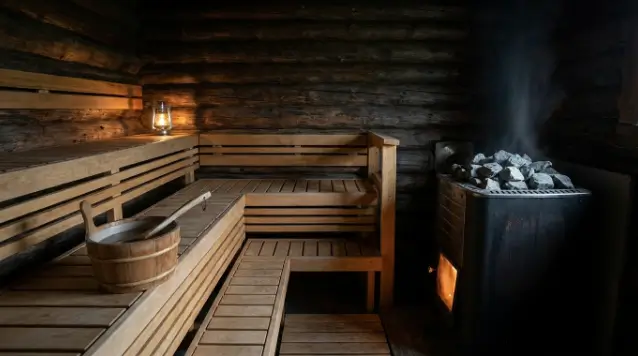
Winter is when a traditional sauna earns its keep: a cedar cabin holds 170 to 190 degrees regardless of outdoor temperature, the cold-to-hot contrast is sharper and more satisfying than in warm months, and heating bills for the unit itself rise only modestly. Compared with a cold plunge or an unheated deck, a sauna is one of the few outdoor amenities that gets more useful, not less, as the temperature drops.
Winter Use Versus Summer Use: What Actually Changes
In summer, stepping out of a 180-degree cabin into 85-degree air barely registers as a temperature change, and the room itself has to work against ambient heat just to hit target. In winter, that same cabin creates a 150-plus degree swing between inside and outside, which is the physical sensation most regular sauna users describe as the real payoff. The heater also has an easier baseline job in some ways, since cold, dry winter air carries less humidity into the cabin than muggy summer air, which can make it easier to hold a stable, dry heat once the room is up to temperature.
Running Cost: Cold Months Versus Mild Months
A heater does draw more power reaching temperature on a 20-degree evening than on a 65-degree one, but the difference is smaller than most first-time owners expect, especially in a well-insulated cabin with tight door seals and a proper vapor barrier behind the paneling. Uninsulated or poorly sealed units see a bigger jump in cold weather, which is one more reason panel construction and door hardware matter more than the marketing photos on a listing. Budgeting a modest increase in electric use during the coldest months, rather than assuming no change at all, sets realistic expectations without overstating the cost.
Buying in Winter Versus Buying in Peak Season
Outdoor home projects slow down in winter across most of the country, which tends to free up faster scheduling from installers who are busy with decks, patios, and landscaping the rest of the year. A buyer placing an order in January or February often gets quicker delivery and installation attention than one ordering in May, when outdoor project demand peaks. Winter is also, practically speaking, the season when a new owner finds out fastest whether they will actually use the sauna regularly, since the contrast with cold weather makes the habit stick faster than a summer purchase where the appeal is more subtle.
Wood Movement and Clearances in Cold Climates
Kiln-dried cedar and spruce staves handle freeze-thaw cycling well, but any outdoor cabin needs a level, stable pad so seasonal ground movement does not rack the frame over several winters. Stove or heater clearances to combustible walls do not change with the season, but door seals and any exposed hardware are worth a quick check before the first hard freeze, since ice buildup around a poorly fitted door can let heat escape and make the heater run longer than it should. Buyers weighing models built for genuine four-season use can compare cabin insulation and heater wattage across the current lineup at SweatDecks, since not every listed unit is built with the same cold-weather tolerances.
See also: How Blockchain Technology Is Used in Healthcare
Why the Cold-to-Hot Contrast Matters for Regular Use
Longtime sauna users in Nordic climates built the tradition around exactly this contrast, alternating a hot cabin with cold air, snow, or water. That rhythm is harder to replicate convincingly in a warm-weather climate, which is part of why winter ownership in colder regions tends to produce more consistent, longer-term use than a sauna bought purely as a summer patio accessory. A cabin used three or four times a week through the coldest months tends to stay in that habit year-round, since the routine is already established by the time warmer weather arrives.
Owning a Sauna Versus Paying for Cold-Weather Wellness Access
Some households consider a gym or spa membership with sauna access instead of buying their own unit, and the comparison shifts heavily once winter enters the picture. A monthly wellness membership with sauna access often runs $60 to $150 a month, which adds up to $720 to $1,800 a year, and still requires driving somewhere and working around a facility’s hours. A home cabin has a higher upfront cost but no recurring fee, no drive in bad weather, and no waiting for a shared room to open up on a busy evening. Over a three to four year period, a household using a home sauna consistently through the winter months typically comes out ahead of a membership on cost alone, and gets the sauna at 10pm on a Tuesday without checking anyone else’s hours.
Portable Winter Setups Versus a Permanent Cabin
A pop-up or tent-style portable sauna is sometimes marketed as a cheaper winter option, and it can work for occasional use, but the comparison with a permanent cedar cabin is not close on performance. Portable units rely on thin fabric walls and struggle to hold stable heat once outdoor temperatures drop toward freezing, often requiring the heater to run near its maximum output just to maintain a moderate session temperature. A permanent, insulated cabin with proper wood construction holds heat far more efficiently in cold weather and tends to last many winters longer than a fabric-walled unit, which is worth factoring into any true cost comparison between the two formats.
What the Research Says About Consistent Sauna Use
The health research on sauna bathing is built almost entirely on populations that use saunas year-round in cold climates, which is worth keeping in mind when reading the studies. A large Finnish cohort found that men who used a sauna four to seven times a week had lower rates of fatal cardiovascular events and all-cause mortality than men who used one only once a week, an association that held after adjusting for other cardiovascular risk factors. A related analysis found that sauna bathing frequency and cardiorespiratory fitness were jointly associated with lower long-term mortality risk. Separate research measuring blood markers after sauna sessions found short-term changes in cardiovascular function among regular users. None of this proves winter use specifically drives better outcomes, but the underlying data comes from exactly the kind of consistent, cold-climate habit that a well-built winter sauna makes easier to sustain.
Frequently Asked Questions
Does a traditional sauna work in freezing weather? Yes. A well-insulated cedar cabin reaches 170 to 190 degrees inside regardless of outdoor temperature.
Does cold weather cost more to run a sauna heater? Slightly. A properly insulated cabin with tight seals adds only modest run time compared with mild weather.
Is summer or winter better for buying a sauna? Winter buyers often get faster installer attention since outdoor project demand slows in cold months.
Do sauna heaters need extra protection in cold climates? The heater itself does not need winterizing, but door seals and any exposed plumbing should be checked before hard freezes.
References
- Association between sauna bathing and fatal cardiovascular and all-cause mortality events, JAMA Internal Medicine, 2015
- Joint associations of sauna bathing and cardiorespiratory fitness on cardiovascular and all-cause mortality risk: a long-term prospective cohort study, Annals of Medicine, 2018
- Short-term effects of Finnish sauna bathing on blood-based markers of cardiovascular function in non-naive sauna users, Heart and Vessels, 2018
By Paula Ridgeway
